
Colorado golf doesn’t stop in October. It moves indoors. A golf simulator league gives you a set tee time every week, a team to play for and a leaderboard that runs until the courses reopen.
The golfers who keep playing together through the winter are often the same people who fill charity tournaments in the spring. That is the real impact of a good league: it keeps a golf community together for twelve months instead of six. Here is how simulator leagues work, what they cost, and where to find one around Denver and the Front Range this season.
A golf simulator league is a weekly competition played in indoor simulator bays, with scores tracked across a season of roughly 3 to 13 weeks. You play a real course on screen, the launch monitor measures every shot, and the software keeps score.
Most Front Range leagues run on weeknights at bars and golf lounges, so food and drinks are part of the night. That social side is the point for a lot of players. You get the rhythm of a summer men’s or women’s league without frozen fingers or a 6 a.m. tee time.
You sign up as a team or an individual, get assigned a league night, and play a set number of holes each week in your bay. Scores are handicapped so different skill levels can compete, and the season usually ends with playoffs or a finale night.
Formats vary more than most people expect. Three examples from Front Range leagues:
Two rules catch first-timers. Some leagues play out every putt past a set distance (Ironwood plays anything over ten feet) instead of conceding, and mulligan rules vary. Ask about both before your first night so the scorecard doesn’t surprise you.
Expect roughly $130 to $200 per player for a fall or winter season, depending on length and format. Food and drinks are usually extra.
Current published prices from Front Range leagues:
Compare cost per round, not the headline fee. A 13-week season at a higher price can work out cheaper per night than a short league, and a team fee split three ways is a different number from a per-player fee. Also ask whether bay time is included or billed separately on league nights.
Four questions to ask before you sign up
The quickest way is to check the CUP Event Hub, where venues list their leagues with dates, formats and sign-up links. These are the places to start:
Want to try the scene before committing to a league? The Local Drive’s RiNo location is on the route for The ParHopper Open, an Oktoberfest mini golf bar crawl on October 10.
Fall sessions are already underway, and many venues open a second session after the holidays. If a league you want is full, ask to go on the sub list. It is the most reliable way to get a spot in the next session. You can browse more indoor and outdoor venues on the Colorado event venues page.
It depends on the league. Competitive leagues often require an established handicap before the season starts, while social and scramble leagues usually don’t.
Some leagues accept an approximate index and adjust it from your first few weeks of scores. If you don’t have a handicap, start with a scramble, couples or all-skill-levels partner format, where one strong shot per hole is enough and nobody is grinding over a four-footer. After eight years of running golf events, the pattern we see is simple: new players stick around when the first night is fun, not when it is fair to the decimal.
Yes. A simulator tournament or closest-to-the-pin night is one of the easiest off-season fundraisers to run, because the venue handles the bays, food and scoring.
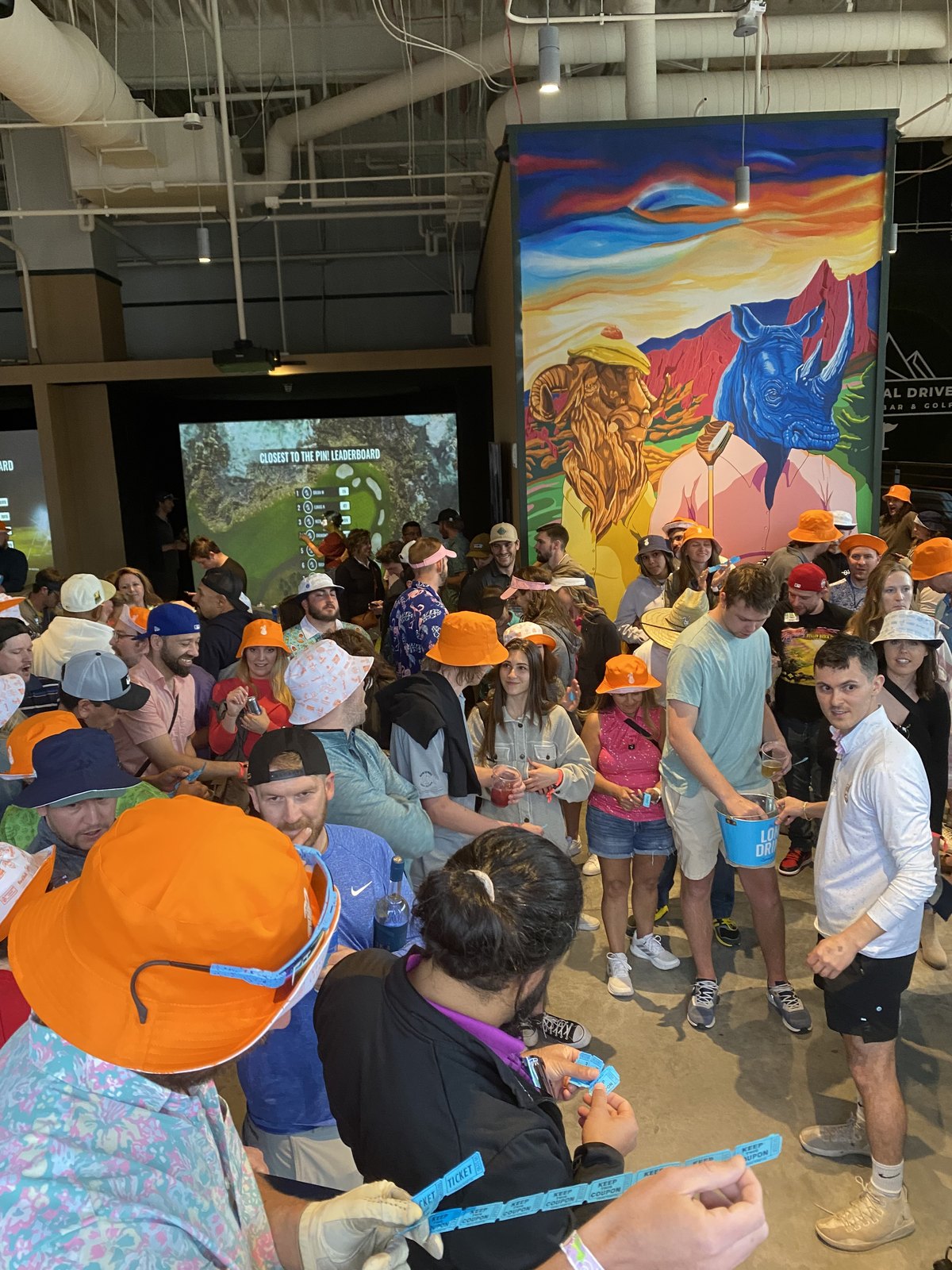
Keep it simple: book a block of bays, sell team entries, add a longest-drive and closest-to-the-pin contest, and put a small raffle on the bar. Venues with private event space, like The Local Drive, make this easy to host. Many of the games in our 50 Charity Golf Tournament Ideas work just as well on a simulator. CUP events have helped raise $2.2M+ for Colorado causes, and plenty of the best ones started as a small night with friends.
If you’re planning one, list it on the Event Hub for free so Front Range golfers can find it.
 CaddieCUP's AI assistant
AI answers can be wrong. Check event details on the event's page. Privacy