
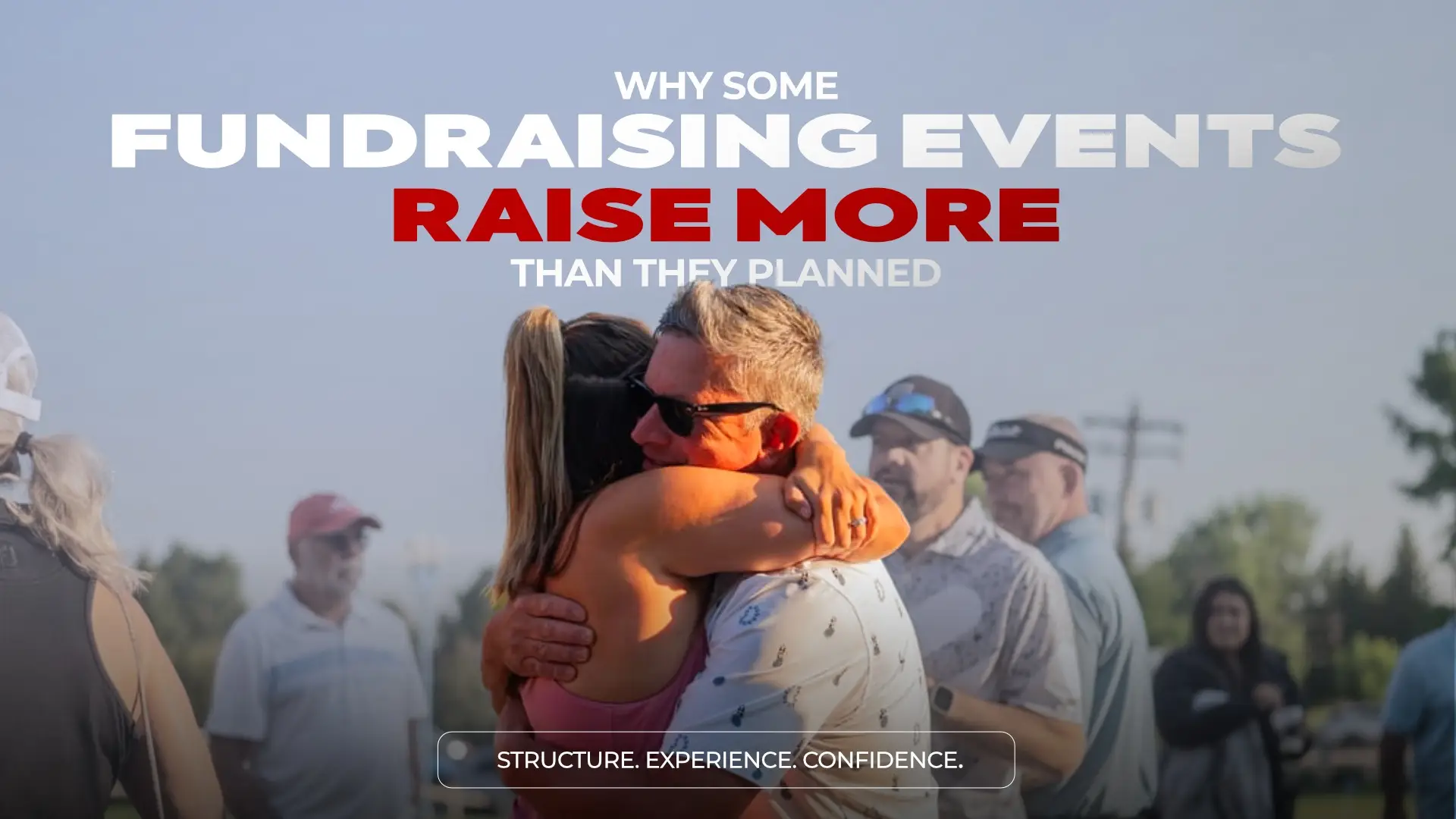
At first glance, many fundraising events look the same. Same course, similar cause, comparable number of golfers. Yet one quietly exceeds its goal while another falls short, sometimes by a wide margin. If you’ve ever wondered why your event didn’t raise as much as a similar one, the answer rarely comes down to luck, size, or enthusiasm. It comes down to structure, experience, and confidence, all set long before event day. As the founder of Colorado Under Par, I’ve seen this pattern hold again and again. Here’s what actually separates the events that overperform.
Most organizers assume results hinge on things they can’t control, the weather, the economy, how generous sponsors feel, how many golfers turn out. Those things matter, but they’re rarely the deciding factor. The events that outperform aren’t better causes or bigger organizations. They simply have structure, a plan, and clear goals to work toward, which removes uncertainty early and changes how every decision downstream gets made.
High-performing events don’t feel frantic behind the scenes. They tend to have a defined event vision, clear fundraising targets (not just “raise as much as possible”), a sponsor structure that makes sense on paper before outreach begins, and a marketing timeline that builds steadily instead of spiking late. That structure does more than organize tasks, it creates momentum. Teams stop reacting and start executing, sponsors respond to the clarity, and golfers register earlier because the communication feels intentional. When structure is missing, teams spend the whole season compensating, and that scramble rarely converts into extra dollars.
Golfers and sponsors don’t just give to causes, they invest in experiences. Events that raise more typically deliver smooth registration and communication, clear sponsor visibility without clutter, contests and activations that feel planned rather than improvised, and a day that runs on time and feels professional. That experience does two things: it increases on-site giving and sponsor engagement in the moment, and it directly influences whether people come back, often at higher levels. Fundraising isn’t separate from experience. The experience is the fundraising engine.
Sponsors can sense uncertainty immediately. They don’t need perfection, but they’re looking for clear tiers, defined benefits, and a team that knows what the event is trying to accomplish. Events that raise more don’t “ask harder”, they ask with confidence, because the plan actually exists. That confidence tends to produce earlier commitments, higher-tier sponsorships, less back-and-forth, and stronger renewals the following year. When sponsors believe an event is well-managed, they stop hesitating, often before a single golfer is visible.
Here’s an overlooked difference between average and standout events: the internal experience. Well-structured events protect staff and volunteers from burnout by reducing last-minute decisions, clarifying who owns what early, preventing avoidable surprises, and freeing people to focus on relationships instead of logistics. A team that isn’t overwhelmed makes better decisions, and better decisions compound financially. A stressed, overworked committee is usually a symptom of missing structure, not missing effort.
Events that exceed their goals don’t add chaos. They focus on the right structure, the right experience, and the right conversations early, and let everything else flow from those foundations. If two events look similar on the surface but deliver different results, it’s usually because one invested in the planning that created confidence, and the other relied on effort alone.
Why does my event not raise as much as similar ones?
It usually comes down to structure, not luck or size. Events that outraise others set clear goals, build a sponsor structure before outreach, and market on a steady timeline, which removes the uncertainty that quietly costs the others money. Similar courses and causes can produce very different results based on planning alone.
What are sponsors looking for in a golf tournament fundraiser?
Sponsors look for clarity and confidence: clear sponsorship tiers, defined benefits, and a team that knows what the event is trying to accomplish. They don’t need perfection, they need to believe the event is well-managed, which leads to earlier and higher-tier commitments.
Why is my tournament committee stressed and overworked?
It’s usually a sign of missing structure, not a lack of effort. When ownership isn’t clear and decisions pile up late, teams spend the season reacting. Defining roles, goals, and a timeline early prevents the last-minute scramble and frees the team to focus on relationships instead of logistics.
What should I focus on when planning my golf tournament?
Focus on three things early: the right structure (vision, goals, sponsor tiers, marketing timeline), the right experience (smooth registration, professional event day), and the right conversations with sponsors before budgets close. Everything else builds from those foundations.
If your past results didn’t match expectations, start with structure, not stress. Explore our Resource Center for the tools to work through those early planning decisions, and list your event on Colorado Under Par to reach participants across the state.
Best regards,
Andrew Mueller, Founder, Colorado Under Par
Get your event in front of the right audience and start building momentum in minutes.
 CaddieCUP's AI assistant
AI answers can be wrong. Check event details on the event's page. Privacy